
The Art of the Wild: From Grandparents’ Mantels to National Policy
Long before I stood before a classroom at the University of Wisconsin-La Crosse teaching Environmental Policy, my art education began on my grandparents’ mantel. It was there, in the 1970s, that a hand-carved set of trout lived. Admiring those natural vintage wood grains, I could see the artist’s license at work—a silent, graceful communication of the wild fish that swim Wisconsin’s streams.
Those carvings weren’t just decor. They were part of a cozy space of Sunday night family activity, the Lucky 13 Fishing Show, in a den filled with books about water. Looking back, that artwork wasn’t just aesthetic—it was foundational. It shaped me into a vigilant advocate for water quality and biodiversity, grounding me in the visceral connection we humans have to our environment.
A Legacy of Visual Advocacy
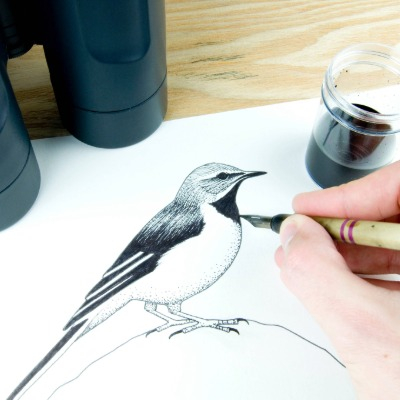
The arts have always been the heartbeat of conservation. They didn’t just portray the American landscape: they created the political will to protect it. We see this through the masters who came before us:
- The Illustrators: John James Audubon transformed wildlife from a “commodity” to be used into a “heritage” to be cherished. His emotional, life-sized portraits sparked the birth of our first wildlife protection societies.
- The Painters: Thomas Moran and C.M. Russell provided the “visual evidence” for a Congress that had never seen the Missouri River or the wonders of Yellowstone. Their works led directly to the birth of our national parks. Russell in particular added a vital layer of cultural conservation, mourning the loss of the open range and honoring the environment through the eyes of Native Americans.
- The Writers: Henry David Thoreau and John Muir provided the “soul.” They forwarded the philosophy that “wildness” is a requirement for spiritual health—a philosophy Muir eventually hammered into the bedrock of the National Park Service.
- The Photographers: Ansel Adams brought the movement into the modern era, using high-contrast photography to turn environmentalism into a mainstream, visual “brand” the government simply couldn’t ignore.
- The Philosophers: Aldo Leopold expanded this legacy by introducing a “Land Ethic.” In his work, A Sand County Almanac, he challenged us to stop seeing the land as property and start seeing it as a community to which we belong. The lesson he taught, that “to keep every cog and wheel is the first precaution of intelligent tinkering,” forever changed how we manage and respect our ecosystems.
 From the Bookshelf to the Heart
I love how the art of writing and books take us away, offering a slowing of life. They stand in stark contrast to the unrelenting onslaught of modern digital media. The shelf behind me is a living archive of our relationship with the Earth’s waters.
Consider the vintage classics of Ernest Hemingway— from the raw, physical connection with nature found in the Nick Adams Stories to the enduring struggle of The Old Man and the Sea. Other classics are fortified with both technical and visionary concepts. John Ormsbee Simonds’ Earthscape provides a blueprint for harmonious design while Julia Watson’s revolutionary Lo-TEK reminds us the “high-tech” solutions we seek today have been practiced by Indigenous peoples for thousands of years.
Finally, there are books that tie our environment to the rhythm of music. One of my favorites is Redemption, written by Cedella Marley about her brother, Bob Marley. It overflows with his timeless wisdom: “Earth is life’s natural ruler, healer, and redeemer. Earth returns us to our natural self, and to God. If we stay rooted to her, we will be united in creation by love.”
And now comes a new one from the rich shelves of Pearl Street Books in La Crosse, The Serviceberry by Robin Wall Kimmerer, author of the #1 NYTimes best seller, Braiding Sweetgrass. (Photo by: Joni Welda)
The Trance of the Frontier
I felt the full weight of this history of reflection recently in Montana. I had just finished a 15-mile excursion into the wilderness on a bitter November day complete with a wind storm. With fatigued legs and that wonderful, intoxicated “outdoor air brain,” I found myself at the famous Borries Steakhouse in Great Falls.
Across the bar, I stared into the eyes of a Native American portrait painted by C.M. Russell in the early 20th century. I fell into a trance, thinking deeply about our place on this earth. It reminded me we are not meant to be plunderers, but participants in a harmony. While I stared at Russell’s work after a day in the cold Montana air, I felt as good as I’ve ever felt inside.
Whether it appears as a masterpiece in a steakhouse, a cherished book, or carved wooden trout on a mantle, art remains our most powerful tool for remembering who we are and what we must protect.
Jason Gilman, JBG Planning LLC