
I know wolves make some people in Wisconsin uneasy — uneasy enough that they’d prefer a landscape without them. I don’t dismiss that feeling. But after years of paying close attention to how our forests, prairies, wetlands, and pollinators are changing, I’ve come to see wolves as part of a much bigger story that affects all of us.
The natural order doesn’t disintegrate in one dramatic moment. It loosens slowly, thread by thread, until the pattern that once held everything together — forest, prairie, wetland, savanna, riparian corridor, predator, pollinator — begins to fray. If you stand still long enough in any remnant of mature habitat, the interdependence of the system is unmistakable.
Predators are often the first strand to weaken. Some disappear because we intentionally remove them. Others fade because of roads, fragmentation, or slow erosion of the spaces they need. Wolves in Wisconsin are a perfect example. They’re not just hunters: They’re shapers of behavior. A wolf pack moving through a forest changes how deer browse—where they linger, how long they stay, how intensely they feed.
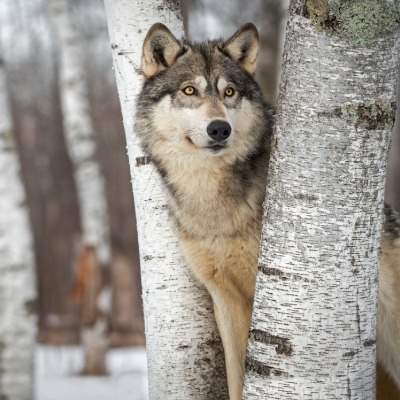
That pressure isn’t cruelty. It’s choreography. It keeps herbivores moving, keeps saplings alive, and keeps the understory from being eaten down to the nub.
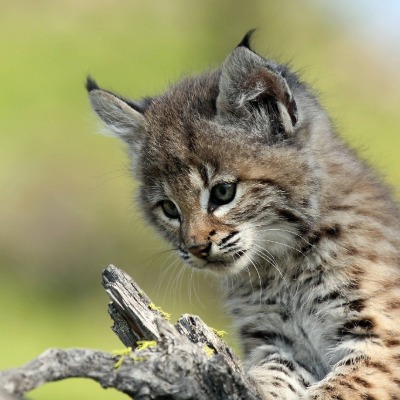
It’s not just wolves. Coyotes on a ridge, foxes weaving through a meadow, bobcats slipping along a savanna edge, and birds of prey patrolling riparian corridors apply constant pressure. They keep the middle of the food web from swelling beyond what the land can bear.
When predators thin out, herbivores and rodents step into the vacuum. They stay longer in one place. They browse saplings before they reach the canopy. They graze prairies into uniformity.
They strip seeds and seedlings from forest floors and wetland margins. They nibble away the flowering shrubs along streams that once fed bees, moths, and butterflies from spring through fall. None of this is malicious. It’s simply what happens when the natural brakes on their behavior are removed.
The pollinator crisis enters the story
This is not a separate issue: It is the most visible symptom of a deeper imbalance. Pollinators depend on diversity:
- Layered forests with blooming understories
- Prairies rich in forbs
- Wetlands with sedges and emergent flowers
- Savannas with scattered oaks and sunlit openings
- Riparian zones with willows and dogwoods that bloom in sequence
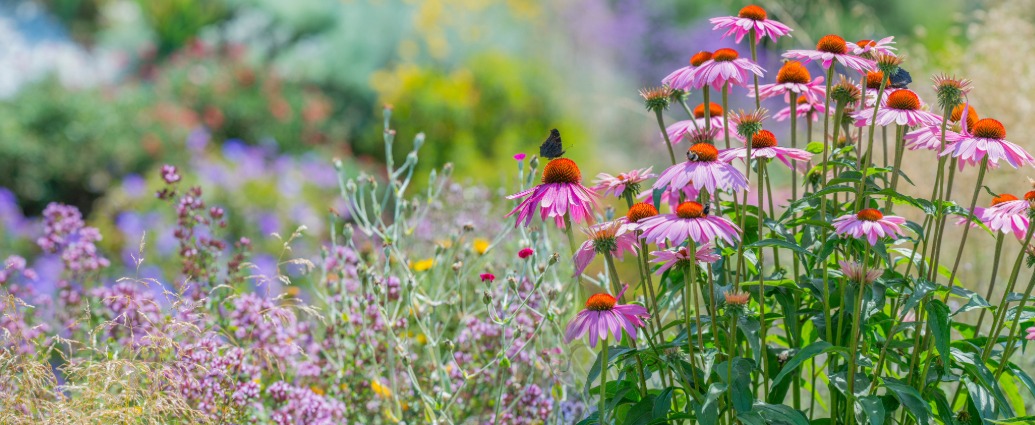
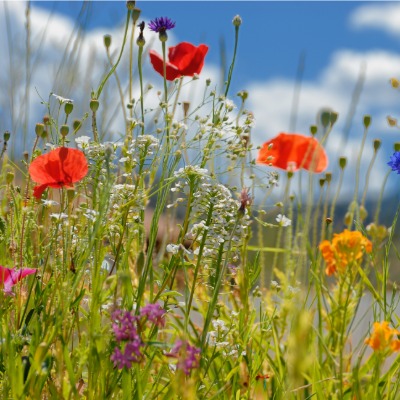 When herbivores overbrowse, the first plants to disappear are often the very ones insects rely on. When rodents boom, seed banks shrink. When prairies are grazed too uniformly, the mosaic of blooms collapses into monotony. Pollinators matter because they are the engineers. More than three‐quarters of flowering plants — forest wildflowers, prairie forbs, wetland blooms, savanna shrubs, riparian willows — depend on insects to move pollen from one blossom to the next. Without that transfer, seeds don’t form, fruits don’t ripen, and the next generation of plants never arrives.
It’s not just nature that leans on them. Our orchards, berry patches, vegetable gardens, and farm fields rely on the same intricate partnerships. Every apple, cranberry, squash, and sunflower seed begins with an insect carrying a few grains of pollen. When pollinators falter, the entire system — wild and agricultural — thins out. Diversity shrinks. Food webs contract. The land’s ability to feed both wildlife and people weakens. Pollinators’ importance isn’t sentimental: It’s structural. They are the link between plant life and everything that depends on plant life, which is to say nearly everything.
Honey bees can’t fill the gap
Because many people assume honey bees can simply take over this work, it’s worth saying why that’s not true. They’re livestock and valuable but they are not native. They evolved alongside European flora, not the wild plants that anchor Wisconsin’s forests, prairies, wetlands, savannas, and riparian corridors. Most of our native plants depend on native pollinators such as:
- Bumble bees that vibrate pollen loose from flowers honey bees can’t pollinate at all
- Solitary bees that fly in cold spring weather when orchards bloom
- Specialist bees that match their life cycles to a single genus of wildflower.
These insects do the bulk of pollination in both wild landscapes and many crops. When native pollinators decline, honey bees can’t replace them. The system simply cannot function.
Honey bees can survive only because humans actively maintain them, not because the landscape would support them on its own. If native pollinators disappear, the ecosystems that sustain both agriculture and honey bees unravel. The system eventually fails for all of us.
Even climate resilience — the ability of plants to flower on time, to withstand drought, to recover from disturbance — depends on the stability of the larger ecosystem around them.
At the heart of this unraveling is the loss of mature, balanced ecosystems like these:
- Old forests with layered canopies and rich understories
- Prairies with deep roots and shifting mosaics of bloom
- Wetlands that hold water and life in equal measure
- Savannas where scattered oaks create a dance of light and shade
- Riparian corridors that braid water, soil, and vegetation into living buffers
These are not just habitats: They are stabilizing forces. They buffer extremes, shelter predators, support diverse plant communities, and offer refuge for insects through droughts, storms, and heat waves. When we lose them, everything else becomes more brittle.
 Wolves matter, but there is more at stake
This conversation can’t be limited to wolves. It has to be about whether we want functioning ecosystems or simplified ones. It’s about whether we want forests with saplings, prairies with flowers, wetlands with amphibians, savannas with ground‐nesting birds, and riparian zones that hold their banks. Wolves are one thread in that tapestry — but they’re a thread that holds many others in place.
Predator decline, ecosystem simplification, and pollinator collapse are not separate crises. They are different vantage points within the same story: a landscape losing its relationships. The work ahead isn’t about choosing which issue to fix first. It’s about restoring the connections that once held everything together. When predators return, herbivores move differently. When herbivores move differently, plants rebound. When plants rebound, pollinators find their way back. And when forests, prairies, wetlands, savannas, and riparian zones are allowed to mature again, the whole system regains resilience.
The path forward begins with seeing the land as a web of relationships rather than a set of isolated problems. Healing comes from letting those relationships re‐form — slowly, patiently, and in all their complexity — until the pattern of natural order begins to reappear.
By Gary Kurtz
Gary Kurtz is a writer based in Baraboo, Wisconsin. He graduated from UW–Stevens Point in 1977 with a degree in Communications, with additional studies in environmental science and geography. Early in his career he wrote outdoor and nature articles for small Wisconsin publications before moving into other fields. After retirement, he returned to the natural world through photography and the self‐publication of four seasonal wildflower field guides, a project that led him back to essay writing. His work now focuses on ecology, climate, natural history, and the layered cultural and sovereign histories of the Upper Midwest, and appears in conservancy newsletters and online journals.
Sources and further reading:
A Sand County Almanac — Aldo Leopold
Braiding Sweetgrass — Robin Wall Kimmerer
The Hidden Life of Trees — Peter Wohlleben
The Secret Network of Nature — Peter Wohlleben
Where the Wild Things Were — William Stolzenburg
Coyote America — Dan Flores
The Wolf’s Tooth: Keystone Predators, Trophic Cascades, and Biodiversity — Cristina Eisenberg
The Carnivore Way — Cristina Eisenberg
The Song of the Dodo — David Quammen
Nature’s Best Hope — Douglas W. Tallamy
The Forgotten Pollinators — Stephen Buchmann & Gary Paul Nabhan
Buzz: The Nature and Necessity of Bees — Thor Hanson
The Ecology of a Cracker Childhood — Janisse Ray
The Overstory — Richard Powers
The End of Night — Paul Bogard