
Welcome Chris Hardie, and please introduce yourself as a representative of 7 Rivers Alliance and give a quick review of the geography and goals of 7RA.
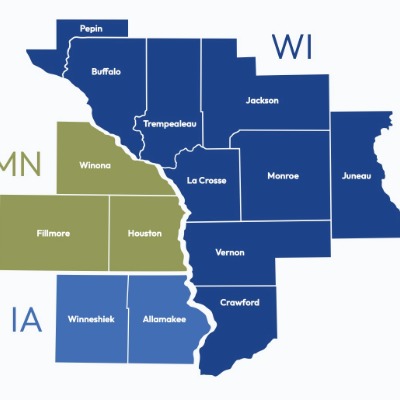
I am the chief executive officer of the 7 Rivers Alliance, a 501 (c ) 6 nonprofit economic development organization founded in the early 2000s. Its mission of fostering collaborative economic development on a regional basis is still our main goal today. It was created by a group of regional business, government, and economic development leaders who believed some of the challenges and opportunities in our region were best addressed through collaboration. The Alliance is one of nine regional economic development organizations in Wisconsin working with the Wisconsin Economic Development Corporation. What makes us different from the others is that we cross state lines. Our service territory includes Pepin, Buffalo, Trempealeau, Jackson, La Crosse, Monroe, Vernon and Juneau counties in Wisconsin along with Allamakee and Winneshiek counties in Iowa and Houston, Fillmore and Winona Counties in Minnesota.
 As a small business entrepreneur, you used your creativity to craft exceptional wines. How did you get started? Tell us about your operation in West Salem.
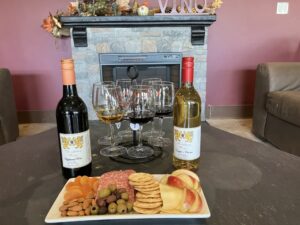
In 2006, my wife Sherry and I moved back to the family farm where I grew up in rural Jackson County. We remodeled and expanded what was once my great-grandparents’ house for our new business venture: Brambleberry Bed and Breakfast. Brambleberry is the Scottish name for blackberries, which were plentiful in our woods. We made it a top priority to serve food raised on the farm to our guests. We included some homemade wines from blackberries and other fruits we grew or harvested. After lots of positive comments about our wines, we decided a bed and breakfast and a winery would be complimentary businesses. Amid the required regulatory paperwork was a significant barrier: our address in Franklin, a dry town without authority to issue a liquor license. We had to initiate and complete a referendum, which passed. After the winery opened in 2013, it was so successful we needed to move the operation to downtown West Salem in 2023.
Even though we started as a locally grown farm operation, our vision was to bring the world of wines to our customers. To make that possible, we work with wholesalers to purchase bulk juice from grapes grown all over the world. We ferment, process, and bottle juices our cold climate cannot support to produce more than 50 varieties including dry reds, whites, and sweeter wines. As the winemaker, I process and bottle each one. We love to talk about wines and give our customers a chance to sample these premium wines. It is a rare day when we are not working the wine counter.
 Within the Driftless Region, larger “magnet” communities are scattered throughout a network of smaller ones. How does the Alliance promote these differences to help all of them connect and work together. Do they work together?
This perfectly describes the wonderful place where we live. We offer folks and families the best of both worlds – larger communities with more shopping, health care, arts, culture and other amenities and smaller communities with few streets and a tighter-knit style of life. Large vs. small is a matter of perspective. The La Crosse metro area at roughly 100,000 is the largest in our area when compared with smaller dots in the road like Franklin with a few houses. The Alliance doesn’t view one as better than the other because we want all communities to be successful. Having a diverse choice of living options nestled among the bluffs, streams and beauty is a strong selling point for the Driftless. If a family we attract settles in Trempealeau so one spouse can work in La Crosse and the other works in Winona, that’s a win for the region. Each community may have very specific needs – like the need to replace an aging wastewater plant – but we all have common challenges and opportunities. Housing, childcare and transportation are always the big three. Our goal is to help communities find solutions that will fit their needs. We won’t settle for a one-size fits all approach.
What is 7 Rivers Alliance doing to help smaller communities become places where families want to live and work?
I have a particular passion for these communities because I grew up in one and our family shopped in many of them nearby. Fifty years ago these communities had thriving commercial districts with businesses that served what was once a network of smaller family farms. Agriculture is still an important industry in our region but most of those smaller farms are gone, along with many of the businesses in those smaller towns. These days, the world of economic development – particularly in smaller towns – is joined at the hip with community development. Our organization has started to offer strategic planning for communities to help them identify priorities. Whether it’s designing or building a public gathering space, putting together a downtown revitalization plan or facade improvement, all improvement options should be considered. We need to help our communities attract entrepreneurs and families who shop and live there. Every community should be able to answer the question: “Why do I want to live there and raise a family?” and be proud to shout it out.
What do you see as the biggest threats to 7 Rivers achieving its goals? How do you measure success?
Access to funding is always a threat, but I would say the biggest threat is complacency. We need our region to embrace change, not fight it. We need to find champions who will take the lead in ensuring their communities are strong and vital. Sometimes those champions come from local government leaders; sometimes those champions come from local civic organizations, or both. Growth is essential for survival. I’m a big fan of history and where we came from, but healthy communities result when a need to plan for growth is instituted and is appropriate.
The ultimate measure of success is when we can reverse declining population growth in our region and bring more families to live here to create a future population of workers so businesses can grow and prosper. But success also comes in very small steps. Success can be measured when there is investment in our existing housing stock or the revitalization of our downtown commercial districts – even one building at a time.
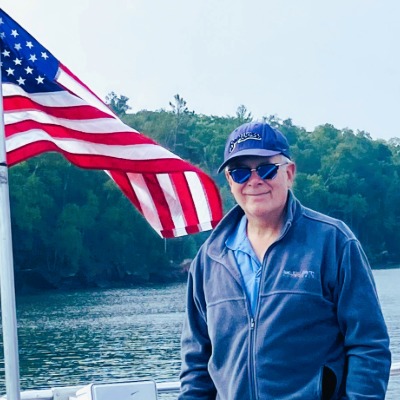 You have had a long run in the media, and now you are an advocate for housing, health of communities, and workforce development. What motivates you?
I spent 32-plus years in the newspaper business – all in this region – because I grew up here, wanted to raise my family here and felt that journalism was my contribution to improving the region. I felt I could make a difference by writing about the challenges and opportunities our communities had. I ended up in the world of economic development because I believe I have the same opportunity to make a difference. It’s a strange use of a mass communications degree, but in the end, it is about communication and making connections. My children live in this region, as do my grandchildren. I want to do my part to make connections, help businesses and communities solve challenges, and create communities and a region that offer a future for everyone.
How can the next generation of motivated advocates get plugged into the work?
It starts with raising your hand. We need the next generation to step forward to say, “I want to help.” The health of a community is built through many layers of government to help fund essential services, but the communities that stand out are those with strong local government and civic leaders who work together. They identify projects or goals and get them done. We can’t allow the polarization of national politics to discourage local engagement. I’ve covered hundreds of local government meetings in my career. I’ve seen committed, dedicated local folks from all political stripes who believe building and strengthening their local community or school board is worth their investment of time. Find your passion – whether it’s education, local government, recreation, youth, seniors, etc. – and see how you can become involved. Believe me, there are lots of folks who will be glad to get you connected.
By Chris Hardie