

Marcy–From the standpoint of geography and goals, what is the Natural Resources Foundation (NRF) of Wisconsin all about?
The Natural Resources Foundation is celebrating 40 years of carrying out its mission of “Protecting Wisconsin’s lands, waters, and wildlife by providing funding, leading partnerships, and connecting all people with nature.” With the aid of more than 5,000 supporters, NRF grants more than $1 million annually to hundreds of habitat projects and environmental education programs through a variety of organizations. Readers may also recognize the Cherish Wisconsin Outdoors Fund created in 2013 by the Wisconsin State Legislature. By allowing license and permit buyers to round up their fees, it has raised $3 million in support of conservation work since the fund’s inception. NRF’s famous field trips throughout the state are another well known service. In 2026, nearly 300 trips will be hosted. Feathered friends also get special attention through annual Birdathon and Fat Bird Week events. These are fun ways to raise money for bird habitat and species protection. Additional information on all of these is at http://www.wisconservation.org/
You have achieved more than a few landscape-altering accomplishments in the Driftless Region. What got you interested in working with the Natural Resources Foundation of Wisconsin?
During my 5 years on the Natural Resources Board (the policy-making board for the Department of Natural Resources), we received monthly reports on DNR/NRF projects to protect incredible habitats throughout the state. Sometimes we were asked to match grant funding, make up for a shortfall, or allow for an opportunity on a property that needed attention faster than the state budget process allowed. After three decades working in the conservation arena, I loved to see these agenda items and learn more about where actual work was getting done.
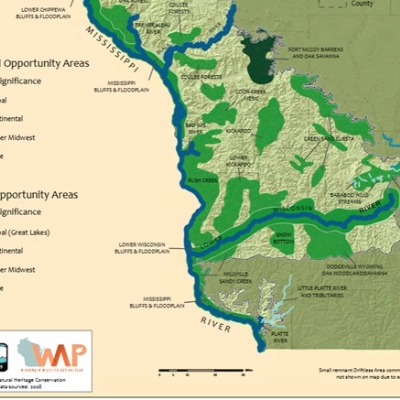
In 2025, NRF launched the Landscape Initiative project for the Southern Kettles in southeast Wisconsin – what we affectionately refer to as “the heart of the Driftless”. I accepted the position as advisor on that project last October. Our goal is to work with an incredible variety of organizations, agencies, and landowners to protect and manage fragile sites in these unique regions. Eventually, we’ll take what we learn to other areas that are under threat.
What do you see as the biggest threats to NRF achieving its goals in Wisconsin and the Driftless Region in particular?
Threats to these and other landscapes are imminent. Pick your favorite: birds, amphibians, plants or native habitats like prairies, remnant pines and hemlock or oak savannas are all experiencing loss. Due to declining budgets in conservation programs at all levels of government, field staff are spread thin to battle invasives, conduct prescribed burns, assist landowners and manage public lands. Development pressure, extreme weather events and runoff issues add to the threat and even though we know the outdoors are an economic boon to our local economies, their care is not funded at a sustainable, consistent level. We need to recognize each component of our ecosystems need protection to be here for the long term. Those who love the scenery, waterways and outdoor recreation of this region know it takes a united effort to make sure it’s here for future generations.
 What’s the best way to support NRF?
As a foundation, we welcome donors at all levels. We invest each amount we receive in a large endowment we use to get more done in the places we love. The NRF board, director, and philanthropy team have the commitment and expertise to work with donors on their particular interest and the legacy they want to leave. For more details, visit info@wisconservation.org or call 608-409-3122.
How do you measure success in the next 5 years? What needs to happen in terms of policy, people, and land use?
Even though threats are great, so are the opportunities. Fortunately, we have a great deal of information for decision-making. Inventories and designations like State Natural Areas, Important Bird Areas and Opportunity Areas recognize the corridors where endangered and threatened habitats exist. By recognizing local organizations and agencies already doing great work, we hope to assist with funding and network support. Measurables or impact in the next few years may be as simple as counting the number of landowners engaged and additional acres of prescribed burn through training more volunteers. We hope future inventories by partners will show increased populations of the birds, plants, and acres addressed.
A variety of models exist on how to get more work done. In no way do I want to give the impression we’re going to come in with a magic wand and have all the answers. The amount of work that gets done by agencies and organizations operating on a shoestring budget is so impressive. Likewise, landowners and farmers are doing a great deal of work for the property they love. Controlling invasive plants and species, planting pollinator habitats, and protecting waterways is hard work but also rewarding. What we’ve heard from those most directly involved is they need help with funding – both project-based and long term. This may be a stopgap while elected officials determine budgets on behalf of constituents or __? __, but we can’t sit back and continue to witness the losses and not do something.
Ecological restoration businesses have increased throughout the region and are also doing great work by contracting specific services, but as small businesses, they can’t do it for free. Fortunately, many landowners can afford to hire them, which accelerates results. Let’s connect the dots from private to public, corridor to corridor. The natural world doesn’t live within boundaries; their range is determined by what resources are available. It will take a combination of solutions to truly succeed in providing a healthy environment. Each entity may have their own way of measuring progress.
 Do you see volunteer motivation of all ages in your work? What do you see as the best way to “plug in” volunteers these days, compared with when you started your career?
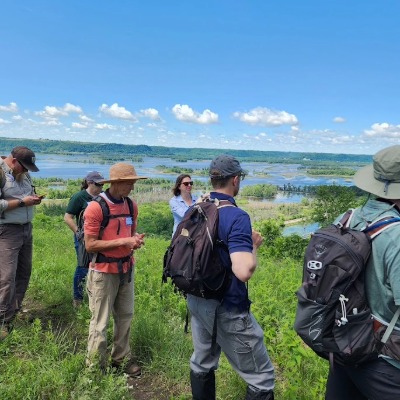
All ages and abilities! Volunteers do a great deal of the work. Each environmental organization seems to have a core group and, as many of us know, sometimes a few volunteers end up doing the bulk of the work for a nonprofit. Increasing the number of trained volunteers and supporting workdays or special projects could help. It has been interesting to witness the increasing involvement of schools and clubs in outdoor work over the years. When students or families get involved, they’re more likely to be good land stewards for life. My kids used to whine and complain when I dragged them out for Earth Day road cleanup but, as adults, they are the Litter Police anytime we’re hiking or floating the river together.
Witnessing the support of businesses when it comes to volunteers has been fun, too. The creativity of giving employees credit for volunteer hours is a win, win, win. When businesses support a project that improves their community, volunteers/employees get some outdoor time, and an agency or organization gets good work done. We’ve also been watching organizations in other areas repeatedly attract an incredible number of volunteers. When asked what brings them back for truly challenging work like removing multi-flora rose or honeysuckle, they don’t talk about the work. They do mention the feeling of satisfaction, good food, fun at the end of the workday, and the friends they’ve met. If I can find a donor to sponsor a volunteer appreciation party, that would be icing on the cake. Even if someone’s interested in conservation but can’t physically help with prescribed burns or cutting invasives, volunteers can help with coordination and outreach or the food and fun after the work is done.
Do you have a message about the diverse organizations in the Driftless Region?
The overarching goal of the Landscape Initiative is to find the right combination of assistance to connect habitats and manage resources. What we learn can be replicated for other special areas. As a state employee and NRB member, I’ve also learned we can get too top heavy if we’re not careful. Additional rules, standards, bureaucracy, reporting, or meetings just for the sake of meetings can be frustrating. Those of us who live here are so fortunate to have experts available in every facet of land management. From the ecologist to the conservation technician, I’ve never met more dedicated individuals working for agencies or organizations to get work done for the greater good. We’ve learned so much over the years on what works and what doesn’t when it comes to implementing conservation practices that benefit the whole ecosystem, which includes humans and communities. In my opinion, we should ask those experts what they need, figure out how to get it for them, and then stand back and enjoy the view!
 You recently published a book (Little Creek Press/Mineral Point) on the Kickapoo Valley Reserve project. Is this an example of how to approach visionary change for the better?
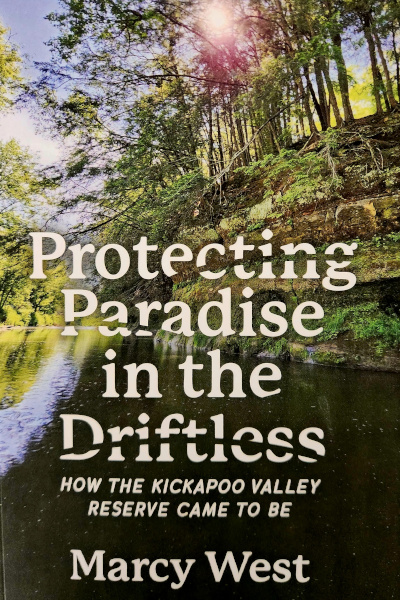
Serving as executive director for the Kickapoo Valley Reserve from 1996-2021 was incredibly challenging and a tremendous honor. The 8,569-acre Reserve located between the villages of Ontario and La Farge in Vernon County is such a cultural and ecological gem in the state of Wisconsin. As with most environmental success stories, it took grassroots citizens to be the catalyst and turn the failed La Farge Lake and Dam project into a public property managed through the State and Ho-Chunk Nation. Even though the communities went through hell as politicians and bureaucrats debated the fate of the project from 1965-1992, the solution that developed is amazing and we all benefit from the incredible asset within the Kickapoo River Watershed. As I neared the end of my career in state government, I was encouraged to write the recent history and document the unique bipartisan process, cooperation with the tribe, and evolution of a citizens’ board managing a large public property. I never set out to be a published author, but hopefully the book does the story justice. It took citizens, dedicated elected officials, a trusting tribal nation, state and federal staff to get it done and a whole lot of community support to make it a success. I’m happy to know the property is protected permanently, but I also know it needs to be taken care of through the same combination of dedicated board members, ecological and cultural experts, volunteers, and generous donors for the unique features to thrive indefinitely.
Protecting Paradise in the Driftless is available through https://bookshop.org/ and at the Friends of Kickapoo Valley Reserve Gift Shop at the KVR Visitor Center, S.3661 State Hwy 131, La Farge, Wi.
What book sticks out in your mind that has, or is, influencing you even now?
True confession: I was never a great student, but in high school one of my teachers recognized my interest in environmental issues and recommended The Monkey Wrench Gang by Edward Abbey. I loved it!
Currently, books by Barbara Kingsolver and Robin Wall Kimmerer should be required reading for high school through centenarians with or without an interest in nature. And I highly recommend Shelter and Storm by my friend Tamara Dean. Her writing truly captures the beauty and ecology of the heart of the Driftless in the collection of essays.
By Marcy West