
The New Town Square: How Pickleball Is Rewiring Community Recreation
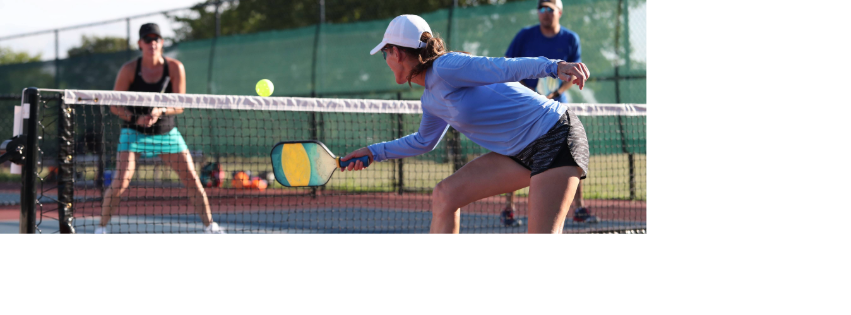
On any given morning across the Midwest — in repurposed schoolyards, park pavilions, church parking lots, and newly striped tennis courts — a familiar rhythm now echoes: the sharp pop of paddle against ball, punctuated by laughter, quick introductions, and overlapping conversations about grandchildren, local politics, and weather.
Pickleball has quietly become something more than a sport. It is emerging as civic infrastructure — a new kind of town square.
For communities navigating aging populations, shifting recreation budgets, and the search for meaningful social connection, pickleball sits at the intersection of health, community design, and returning to a sense of belonging. Its rise reveals less about sport preferences and more about how Americans want to gather.
 A Participation Revolution
Traditional recreational models often centered on performance: leagues, scheduled practices, and skill progression. Tennis, basketball, and softball followed this arc. They reward commitment, but they also create barriers — physical, social, and psychological.
Pickleball inverted that model.
The court is smaller. The learning curve is gentle. Doubles is the norm. Games are short. Players rotate in and out easily. Strangers become partners within minutes.
The result is a rare feedback loop in recreation planning: low barriers lead to rapid adoption; rapid adoption creates visible community energy; that visibility attracts more participants.
In many towns, the busiest public recreation spaces are no longer ballfields but pickleball courts. To some that is a refreshing change, especially in rural communities that are aging and quieter than previous years.
Movement That Sustains
From a health perspective, pickleball occupies a crucial middle ground. It is neither sedentary nor punishing. Instead, it delivers what aging research consistently identifies as the most protective activity pattern: frequent, moderate, socially reinforced movement.
The game blends lateral steps, reaction time, hand-eye coordination, and short bursts of effort. These are precisely the capacities that preserve independence — balance, agility, and cognitive engagement.
Unlike higher-intensity sports that participants may abandon after injury or life transitions, pickleball encourages continuity. Players often increase frequency rather than taper off. The cumulative effect can exceed that of more demanding sports played sporadically.
In public-health terms, pickleball is less a workout and more a habit engine–that ironically has very big health benefits overall–with a bit of preparation.
Social Infrastructure in Motion
What distinguishes pickleball from many recreational activities is not physiology but sociology.
Courts function as informal gathering spaces. Drop-in formats flatten hierarchy. Intergenerational play is common. Retirees share courts with working adults, teenagers, and newcomers to town.
In rural communities — where traditional third places have declined — this matters profoundly. Pickleball courts operate as low-cost venues for connection, conversation, and visibility. People are seen regularly. Relationships form through repetition rather than coordination.
For planners and nonprofit leaders, this reframes recreation spending. Courts are no longer just athletic facilities; they are community cohesion tools.
The Court Conversion Debate
With growth comes tension.
One tennis court can accommodate multiple pickleball courts, dramatically increasing participation per square foot. Municipalities facing constrained budgets see efficiency. Tennis advocates see erosion of existing infrastructure and youth pathways to a beloved sport.
Noise complaints specific to Pickleball have introduced another layer. The distinctive sound of paddles carries differently than tennis balls, forcing conversations about buffers, scheduling, and material innovation.
These debates are not merely about sport preference. They surface deeper questions about who public space is for: competitive athletes, lifelong recreational users, or the broadest possible community.
Increasingly, cities are moving toward hybrid models — preserving tennis while expanding dedicated pickleball facilities — acknowledging that participation and performance serve different civic goals. The hybrid can work, but the multiple lines can impact the arena of “shared space/courts”.
As a somewhat former tennis player, there is a mindset to the court; it’s quiet, it’s a combination of mental strategy, physicality, and endurance that is the draw to the sport, and there is nothing like it on a fine day on a well maintained court with a friend to battle it out–though admittedly it isn’t for everyone. There is even a mindset difference between doubles and singles in tennis.
Pickleball upends these traditions, and yet, provides so much for smaller communities.
Aging Communities, New Design Priorities
Demographic change sits beneath the pickleball phenomenon. Many regions, particularly across the Midwest and rural America, are aging. Recreation systems built around youth leagues and seasonal sports no longer fully reflect community needs.
Pickleball offers a scalable response. It requires less space than many sports, supports year-round programming indoors or outdoors, and aligns with wellness initiatives pursued by health systems and nonprofits.
In this context, a court is not just a place to play; it is preventive care infrastructure.
Communities that recognize this are beginning to integrate pickleball into broader strategies — downtown revitalization, senior wellness programming, tourism events, and multi-use park design.
Not a Replacement — A Rebalancing
The narrative that pickleball is replacing tennis oversimplifies the shift. A more accurate framing is rebalancing.
Tennis remains unmatched as a high-intensity athletic stimulus and competitive pathway. Pickleball excels at accessibility and frequency. Together they form a continuum of lifelong movement.
The most resilient recreation ecosystems are beginning to treat them as complementary — intensity alongside inclusion.
The Future of the Town Square
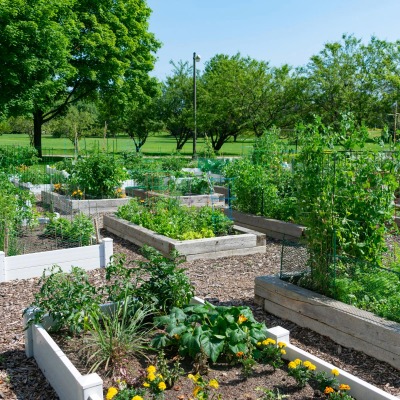
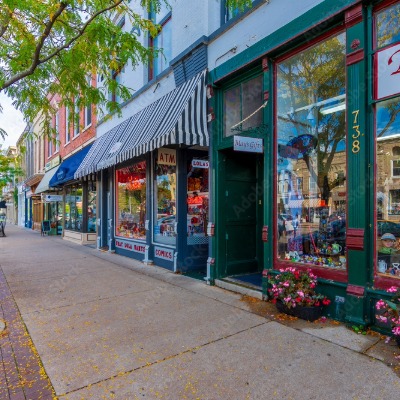
Historically, town squares centered commerce, governance, and public life. Private groups such as volunteering, churches, schools and civic groups also once held a much bigger role in the gathering of individuals to work together. As those functions dispersed, and life evolves to kids or empty nesters, shopping is accomplished either distantly in larger cities or online, communities are searching for new gathering anchors. Coffee shops, farmers markets, community gardens, libraries, and trails each fill parts of that role to some degree, but Pickleball is different.
Pickleball adds something distinct: shared activity without prerequisite identity. One does not need to be an athlete, a customer, or a member. Participation itself is the entry point. That all being said, there are the competitive types even in Pickleball that will find their victims, or create their own “levels” of play. Let’s also realize that even a gentle entry into the sport will motivate you to have the appropriate (court type) footwear, and eyewear as the competition escalates. This is good, and also will likely motivate you to get a bit better “in shape” for the sport. It is a fact that injuries are increasing at emergency wards with twisted knees and ankles, along with “I didn’t see it coming” fast balls hitting one’s face. Best advice? Best to “play your level”.
However you perceive the sport, perhaps the draw is the emotional resonance. In an era defined by digital connection and physical fragmentation, a simple court with rotating partners recreates a familiar civic rhythm — recurring encounters, informal conversation, and visible belonging.
The pop of the paddle is, in many places, the sound of community reorganizing around movement.
Not competition, not performance — but presence.
And that may be why pickleball feels less like a trend and more like a signal of a new structural force in Rural America.
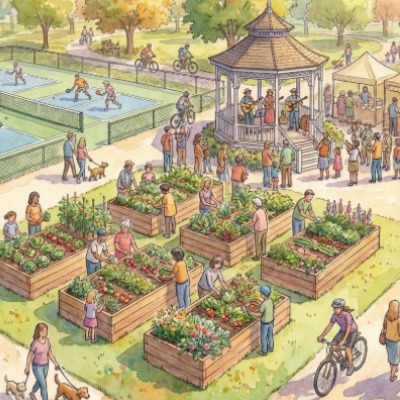
That all being said, integrating these public spaces with gardens, the courts, and gathering parks, trails, and farmers markets is what helps create a new ecosystem of community–recalibrating small community life.
By JD Henley